
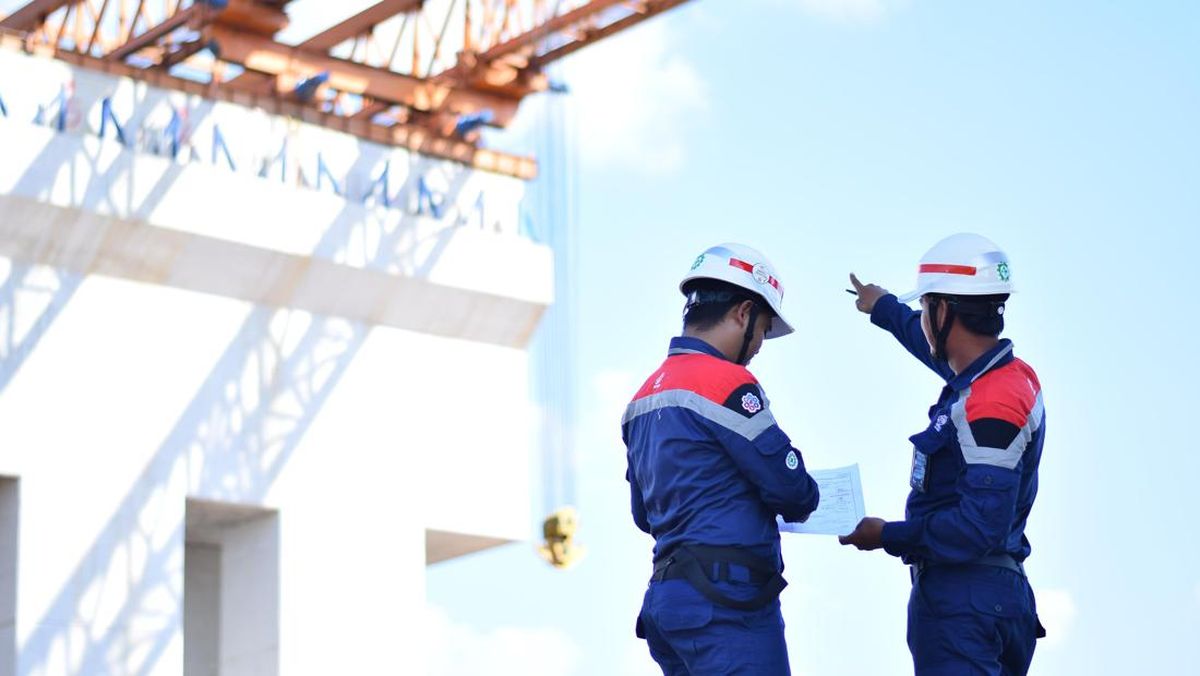
Waskita Karya, one of Indonesia's most heavily indebted and troubled state construction companies, has won a 2.1 trillion rupiah contract, about 118 million US dollars, to build a section of the Yogyakarta-Bawen toll road, a fresh order that offers a modest lift as the company grinds through a years-long debt restructuring.
The company, which trades on the Indonesia Stock Exchange under the ticker WSKT, will carry out the work through a joint operation with fellow state builders PT PP and Wijaya Karya. The consortium will construct Section 3, an 8.1 kilometer stretch in Magelang, Central Java, running from the Magelang interchange to the Borobudur interchange. The scope covers the main alignment, a Magelang access road, an interchange, pedestrian bridges, an underground tunnel and concrete slabs, Ari Asmoko, a Waskita operations director, said in a statement on Tuesday. He described the project as important for mobility and for supporting tourism.
A road linking two Java hubs
The contract is part of a larger toll road of 75.12 kilometers that will connect the Yogyakarta region with Semarang in Central Java. Once fully open, the road is projected to cut travel time between the two cities from three or four hours to about one hour, easing congestion on arterial roads and smoothing the movement of freight, the company said. The route also improves access to the area around Borobudur, the ancient Buddhist temple that is a major tourist draw. The road is designated a National Strategic Project.
Waskita said it would use a mix of digital and technical methods on the build, including automatic curing to maintain concrete quality, a deflection warning system to monitor formwork, a traffic management plan and an automated "Roboflagman" to direct traffic in active zones.
A lifeline order for a distressed builder
The win lands against a grim backdrop. Waskita's shares have been suspended from trading on the Jakarta exchange for years, after it missed bond payments, and the company has been mired in a vast debt restructuring. Its borrowings ran to tens of trillions of rupiah, including a bank-debt restructuring agreement of about 26.3 trillion rupiah, and defaulted bonds that inflicted losses on insurers and pension funds that had bought them for their high coupons. The company's troubles deepened after it emerged that some of its reported sales had been based on fictitious projects, a scandal that led to prosecutions.
Losses, while narrowing, remain heavy. Waskita lost about 3.17 trillion rupiah in the first nine months of 2025, and its first-quarter 2026 net loss shrank to 679 billion rupiah. The company still wins work, booking 3.1 trillion rupiah of new contracts in the first quarter of 2026, much of it state-assigned strategic projects, frequently delivered through consortiums with other state builders, as in the latest deal.
A planned rescue, still uncertain
The government, which owns about 75 percent of Waskita, has been pursuing a consolidation of seven state construction firms into three groups. Under that plan, Waskita would be absorbed by the healthier toll-road builder Hutama Karya, with the state's Waskita shares transferred to Hutama Karya and Waskita potentially going private. The consolidation, targeted for completion around 2026, is now being reviewed by sovereign wealth fund Danantara, which oversees state enterprises, leaving its timing and final shape uncertain. A broader squeeze on public-works spending has added to the strain on the construction SOEs.
For Waskita, the Yogyakarta-Bawen contract is the kind of steady, state-backed work that keeps its order book ticking and its crews employed while the bigger questions, its debt and its future ownership, remain unresolved. The toll road, when complete, will knit together two of Java's major cultural centers. For its builder, the more pressing journey is financial survival.


0 Komentar